
Grip prediction remains one of the most challenging problems in motorsport tire engineering. The friction potential available at the tire-road interface depends simultaneously on the viscoelastic response of the tread compound, road texture, temperature, sliding velocity and the local operating conditions generated by the vehicle.
The methodology analyzed in this article approaches the problem through three principal inputs: road roughness characterization, tire viscoelastic properties and telemetry data. These inputs are combined to estimate both the available maximum grip and the temperature at which that maximum is expected to occur.
The approach was developed specifically for motorsport, where detailed tire information can be difficult to obtain and several parameters required by more complex friction formulations are unavailable. The result is therefore intentionally a simplified methodology designed to capture meaningful relative trends without claiming a complete description of every physical mechanism involved in grip generation.
This approach complements previous VESevo analyses of tire friction and road contact-area modeling, adhesive and viscoelastic tire-road interaction and non-destructive tire viscoelastic characterization.
Grip Prediction: Combining Road, Tire and Telemetry Data
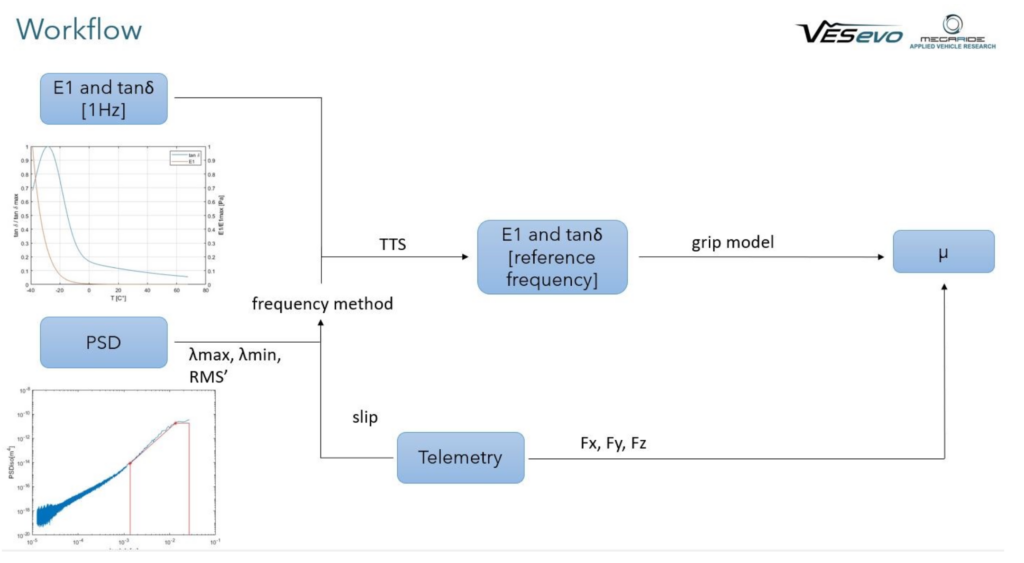
The proposed grip model begins from the idea that tire performance cannot be predicted from compound properties alone. The road defines the spatial excitation acting on the tread, the viscoelastic material determines how that excitation is transformed into energy dissipation, and telemetry describes the actual operating conditions experienced by the tire.
The complete workflow therefore combines three information streams:
- road roughness, represented through Power Spectral Density and derived surface metrics;
- tire viscoelasticity, represented through the real and imaginary components of the complex modulus measured with VESevo;
- telemetry, used to estimate sliding conditions and provide an experimental reference for validation.
Road wavelength and sliding speed are used to estimate the characteristic excitation frequency. The compound curves measured at the VESevo reference frequency are then shifted toward the frequency of interest through a simplified Time-Temperature Superposition procedure.
The resulting material properties and road parameters become the inputs of the selected grip modelling formulation. Telemetry subsequently provides the reference against which predicted grip and optimal temperature are evaluated.
Grip Generation: Viscoelastic and Adhesive Contributions
Understanding grip generation requires distinguishing the principal physical mechanisms acting between the tire and the road. The overall friction potential is generally associated with two contributions.
- Adhesive grip originates from molecular interaction between the tire compound and asphalt inside the real contact regions.
- Viscoelastic grip originates from energy dissipation as the tread is cyclically deformed by road asperities.
Both contributions depend on operating conditions, particularly temperature and sliding velocity. Their relative importance can therefore change considerably across a tire’s working range.
For the preliminary motorsport methodology analyzed in the paper, the adhesive component is initially neglected. This simplification is motivated by the difficulty of identifying the empirical quantities required by available adhesive grip models under motorsport conditions and by the increased importance of viscoelastic effects at comparatively high sliding velocities.
The authors explicitly treat this assumption as a simplification rather than as proof that adhesion is irrelevant. Later comparison with experimental behavior indicates that an adhesive contribution may be required for a more complete representation of the actual grip curve.
This distinction is important when interpreting the results: the method is designed primarily to identify the relative behavior of maximum grip and optimal temperature rather than to reproduce every component of tire-road friction independently.
Viscoelastic Grip Models for Motorsport Applications
Several grip models for rubber friction are available in the scientific literature, including formulations associated with Persson, Klüppel and Popov. For this preliminary methodology, the Popov formulation was selected because of its comparatively simple input requirements.
The predicted viscoelastic contribution depends principally on the road Root Mean Square slope evaluated at the selected minimum roughness wavelength and on the complex modulus of the rubber at the relevant temperature and frequency.
The formulation therefore creates a direct physical connection among:
- road microtexture;
- compound excitation frequency;
- temperature-dependent material response;
- the final predicted grip value.
The simplicity of this approach does not mean that the underlying physics are assumed to be simple. The study uses the formulation as a practical basis for preliminary prediction in an environment where many parameters required by more sophisticated approaches are inaccessible.
Why the Minimum Roughness Wavelength Matters
A critical parameter is the minimum wavelength λmin considered relevant to rubber excitation. It determines the upper wavevector limit used when calculating the RMS slope and therefore directly influences the predicted value of grip.
The paper emphasizes that there is currently no universally accepted method for determining this characteristic wavelength. For the preliminary development, λmin is derived from the macro-wavelength through a fixed scaling factor.
This remains one of the largest uncertainties in the methodology and an important subject for future research. A change in the selected microscopic cutoff can significantly modify the magnitude of the calculated viscoelastic contribution.
Road Roughness and Grip Performance
Road texture affects grip performance both directly and indirectly. It influences the magnitude of tread deformation and determines the spatial wavelengths that excite the rubber.
The surface is characterized through its Power Spectral Density, or PSD. Under the assumption of radial symmetry, the two-dimensional surface spectrum can be reduced to an isotropic representation from which several roughness descriptors are extracted.
Relevant parameters include:
- Root Mean Square surface height;
- Hurst exponent;
- macro-wavelength λmax;
- micro-wavelength λmin;
- Root Mean Square slope.
Of these quantities, λmin and the corresponding RMS slope are especially important for the selected viscoelastic grip formulation.
The characteristic excitation frequency is calculated from sliding velocity and the minimum wavelength. This means that a change in road texture can affect both the amplitude of the predicted grip contribution and the frequency at which the tread material must be evaluated.
The role of multiscale road roughness in rubber friction is examined in more detail in the VESevo article on viscoelastic rubber friction and multiscale roughness models.
Tire Viscoelasticity for Grip Modelling with VESevo
The selected grip formulation requires the real and imaginary parts of the complex viscoelastic modulus of the tread compound.
For this study, the required material properties are provided by VESevo. The technology generates temperature-dependent curves of the real component E1 and imaginary component E2 at a reference frequency of 1 Hz.
These properties cannot be used directly when the tread is excited by road asperities at substantially higher frequencies. The material curves therefore have to be shifted toward the operating frequency of interest.
Time-Temperature Superposition in the Grip Model
Under the assumption that the tread behaves as a thermorheologically simple material, frequency and temperature effects can be related through Time-Temperature Superposition.
The authors considered established approaches such as the Williams-Landel-Ferry law. However, the data limitations typical of motorsport prevented the complete implementation of the more complex formulation.
The preliminary method therefore applies an empirical logarithmic temperature shift based on the ratio between the road-excitation frequency and the 1 Hz VESevo reference frequency.
The paper notes that this empirical relationship reproduces the expected material behavior reasonably well within the investigated case but requires further experimental validation. This is another important limitation to consider before extending the grip model beyond the analyzed conditions.
For further background on measurement of tire compound properties, see the VESevo article on compound testing and viscoelastic characterization.
Grip Measurement: Telemetry and Maximum Grip Envelope
Grip Measurement in this methodology is based on track telemetry rather than on a dedicated laboratory friction rig. Telemetry is processed to estimate the lateral tire-road interaction and construct an envelope describing the maximum available grip at different tread temperatures.
This step is itself challenging. Estimating tire-road forces accurately from vehicle data involves several uncertainties, and the paper stresses the delicacy of deriving a reliable reference from real motorsport telemetry.
Different filtering and fitting approaches are used to identify the upper envelope of the measured data. The resulting curve represents the experimental trend against which the modelled maximum grip and optimal temperature can be compared.
The envelope also supports calibration of the model. Because the RMS slope enters directly into the viscoelastic friction formulation, it can be treated as an optimization variable to reduce the difference between modeled and telemetry-derived behavior.
The paper nevertheless shows that a model containing only the viscoelastic contribution cannot reproduce the complete experimental envelope perfectly. This is one of the indications that other mechanisms, including adhesion, may remain relevant.
Grip Testing: Validation Across Three Motorsport Circuits
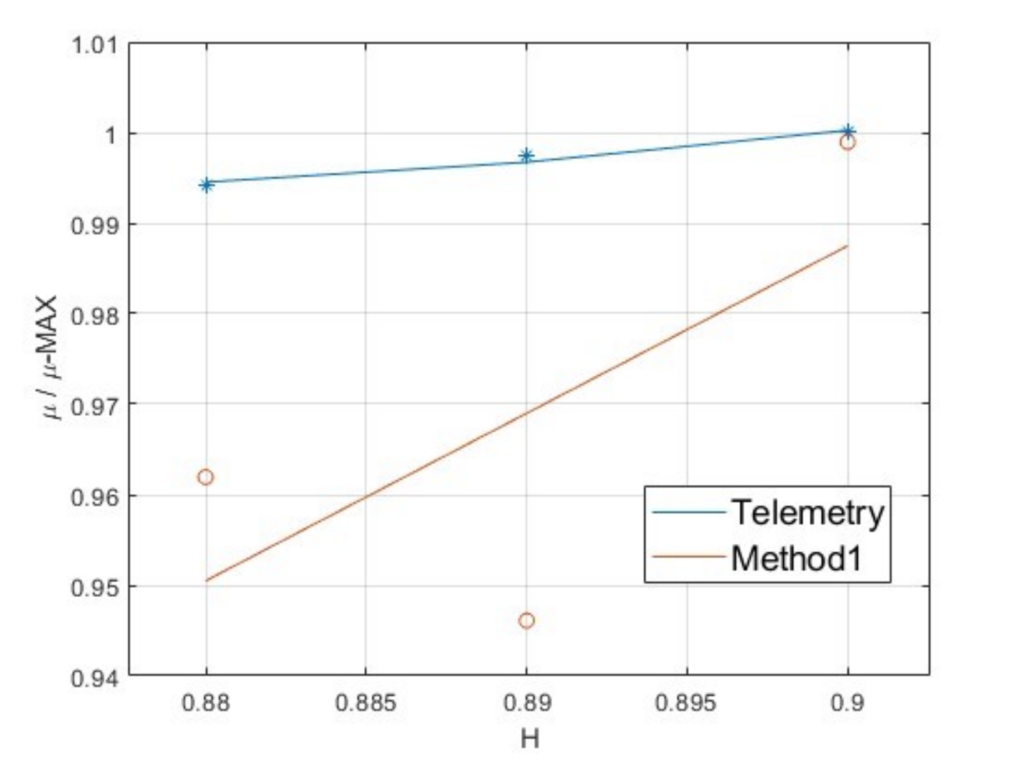
Grip Testing of the proposed methodology uses data from the same vehicle and the same tire compound running on three different circuits. This design allows road roughness to vary while keeping important vehicle and material parameters comparable.
The three surfaces show relatively similar statistical roughness characteristics:
| Surface parameter | Circuit A | Circuit B | Circuit C |
|---|---|---|---|
| RMS [mm] | 5.4 | 6.2 | 6.7 |
| Hurst exponent H | 0.90 | 0.89 | 0.88 |
Because the surfaces are relatively close in these statistical descriptors, the expected differences in grip are also comparatively small. This makes the validation particularly sensitive to model uncertainty and highlights the preliminary nature of the comparison.
Despite this limitation, the model reproduces the general relative trend observed through telemetry. Circuit A is distinguished from Circuits B and C in the expected direction, although the point-by-point correspondence is not perfect, particularly for Circuit B.
Grip Performance: Predicting the Optimal Tire Temperature
For motorsport teams, the most practically relevant output may not be the absolute grip value itself, but the temperature at which the tire is expected to produce its maximum available lateral performance.
This is where the simplified methodology produces its most encouraging result. The paper reports that the prediction of optimal temperature follows the telemetry-derived trend more effectively than the absolute maximum-grip comparison.
The method correctly reproduces the relative change in optimal temperature across the three road-roughness conditions considered. This is particularly useful because tire operating temperature is a parameter that race engineers can actively monitor and manage during a session.
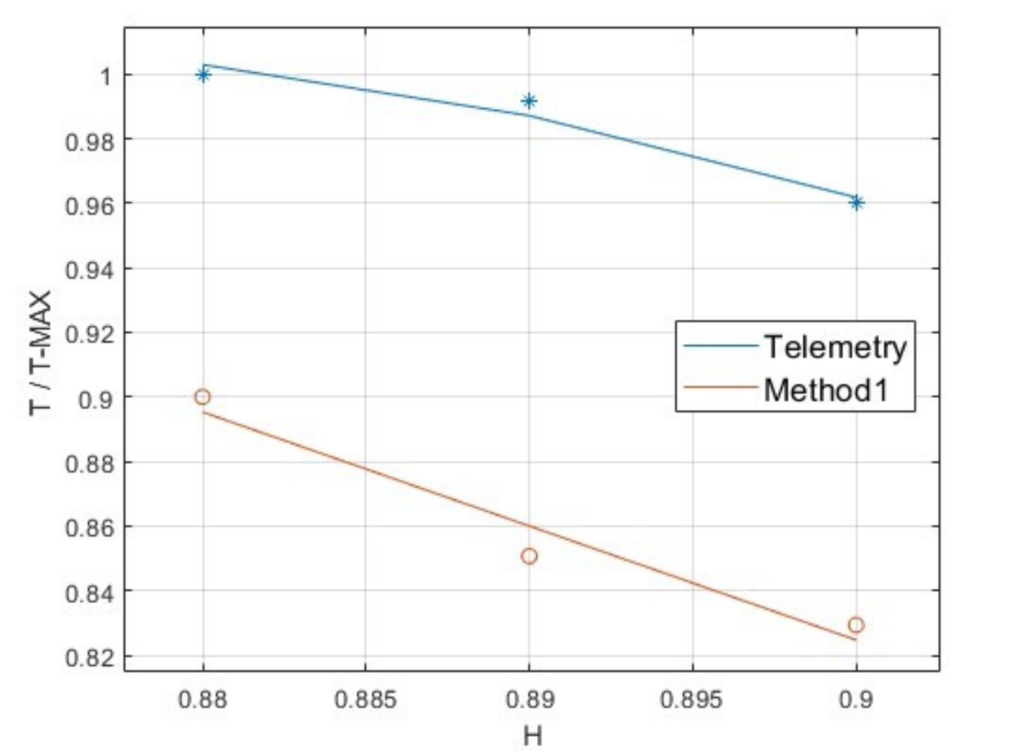
The result should still be interpreted as a preliminary validation. The analyzed surfaces are relatively similar, the available dataset is limited and several parts of the physical model rely on simplifying assumptions.
Nevertheless, identifying the correct relative movement of the optimum temperature is significant because it indicates that combining road texture, viscoelastic characterization and telemetry can capture useful information about real grip performance.
Why Viscoelastic Grip Alone Does Not Reproduce the Full Envelope
One of the most important findings is also one of the limitations of the method. A purely viscoelastic grip formulation can reproduce relevant aspects of the measured behavior but does not generate a perfect match with the complete telemetry envelope.
The authors also investigate the possible inclusion of an adhesive contribution. Even this additional mechanism does not completely solve the discrepancy using the preliminary formulations considered.
This supports a broader engineering conclusion: achieving an accurate grip model requires more than simply adding mathematical complexity. The physical parameters of the adhesive contribution, real contact conditions, road cutoff wavelength and frequency-temperature shift must also be identified reliably.
For the current study, however, complete reconstruction of the friction envelope is not the primary objective. The simplified method is considered useful when it correctly captures the maximum and its temperature location across changing operating conditions.
From a Simplified Grip Model to More Accurate Grip Models
The paper identifies several directions for improving future grip models.
- introducing more complete formulations such as Persson or Klüppel models;
- improving the representation of adhesive friction;
- identifying the microscopic roughness wavelength through a stronger physical criterion;
- validating the empirical Time-Temperature shift experimentally;
- testing circuits with a wider range of surface characteristics;
- increasing the quantity of available telemetry and experimental data.
More sophisticated modeling could improve both the absolute prediction and the temperature optimum. However, it would also require additional inputs that are not always available in competitive motorsport environments.
The engineering challenge is therefore to find the appropriate balance between physical completeness, parameter availability and computation complexity. A useful motorsport grip prediction methodology must remain usable with the information teams can realistically obtain.
Engineering Value of Grip Prediction for Motorsport Teams
A predictive representation of grip can support several areas of motorsport engineering when interpreted within its validated limits.
- tire operating-window analysis, by estimating the temperature associated with maximum lateral grip;
- circuit comparison, by introducing quantitative road-roughness information;
- compound evaluation, through measured viscoelastic properties instead of nominal labels alone;
- telemetry interpretation, by comparing observed tire behavior with physically derived trends;
- simulation inputs, by introducing a road- and temperature-sensitive grip metric;
- setup studies, where predicted tire performance can complement vehicle-dynamics analysis.
The methodology does not provide a universal tire friction coefficient valid under every condition. Its value lies in combining physical measurements and track data into a framework capable of discriminating how the available grip and optimum temperature can change when road conditions vary.
Limits of the Current Grip Prediction Method
The current methodology has several explicit limitations:
- the principal prediction formulation considers only the viscoelastic contribution to grip;
- parameters required by available adhesive models are difficult to determine in motorsport;
- the minimum roughness wavelength λmin remains uncertain;
- the Time-Temperature shift is based on an empirical simplified relationship;
- telemetry-derived tire forces themselves contain uncertainty;
- the three circuits have relatively similar roughness characteristics;
- the available validation dataset remains limited;
- absolute grip prediction is less reliable than relative trend and optimal-temperature prediction.
These limitations are central to the correct interpretation of the study. The work should be regarded as an initial demonstration of a practical prediction framework rather than as a finalized universal grip model.
Frequently Asked Questions About Grip Prediction
What is grip prediction in motorsport?
Grip prediction is the estimation of the tire-road friction potential and its operating conditions before or alongside track testing. In this study, road roughness, tire viscoelasticity and telemetry are combined to estimate maximum grip and optimal temperature.
What generates tire grip?
Tire grip is associated mainly with viscoelastic deformation over road asperities and adhesive interaction between rubber and the road surface. Their relative contributions change with temperature, speed and contact conditions.
Why is road roughness important for grip?
Road roughness determines the spatial scales that deform the tread, influences the RMS slope used by the viscoelastic grip model and contributes to the calculation of excitation frequency.
How does VESevo contribute to grip prediction?
VESevo provides temperature-dependent viscoelastic properties of the tire compound. These curves are shifted toward the relevant road-excitation frequency and used as inputs to the grip model.
How is maximum grip estimated from telemetry?
Track data are processed to estimate tire-road interaction and identify an upper envelope representing the maximum available grip across tire temperature.
Can the model predict optimal tire temperature?
Within the analyzed dataset, the methodology reproduces the relative trend of the optimal temperature across the three circuits particularly well.
Does the model include adhesive grip?
The primary simplified prediction neglects the adhesive contribution. The paper explores adhesion as a possible improvement and concludes that it should be investigated further for a more complete grip representation.
Is the predicted grip value exact?
No. The current method is more reliable for reproducing relative trends, maximum-grip behavior and optimal temperature than for determining an exact universal coefficient of friction.
What prevents a fully accurate grip model?
Important uncertainties include adhesive-friction parameters, the minimum road wavelength relevant to tread excitation, frequency-temperature shifting, telemetry-derived forces and the limited amount of validation data.
Can this methodology compare different circuits?
Yes. The preliminary validation compares the same vehicle and tire compound across three circuits and reproduces relative changes in optimal temperature associated with different road conditions, although broader surface variability is required for stronger validation.
Scientific Source
This article is based on: Revelin, N.; Genovese, A.; Capra, D.; Scotto d’Antuono, A. Development of a simplified methodology for grip prediction in motorsport.
Editorial note: This article provides a technical interpretation of the cited study. The methodology is preliminary and incorporates simplifying assumptions associated with adhesive friction, road-scale identification, Time-Temperature Superposition and telemetry-based validation. It should not be interpreted as a universal or fully validated tire grip prediction model.